 English
 Español
 عربى
عربى

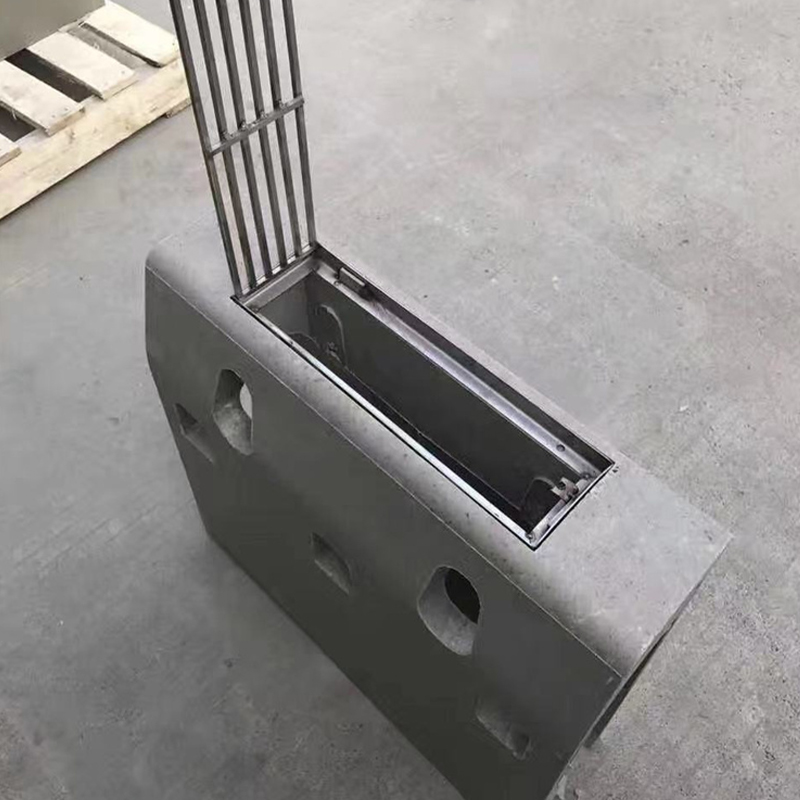
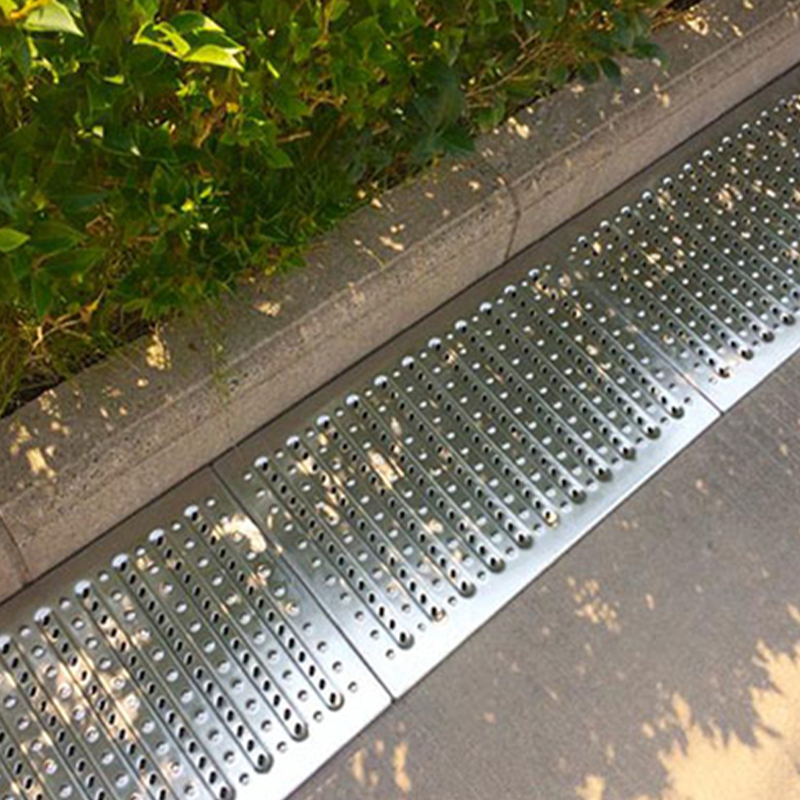
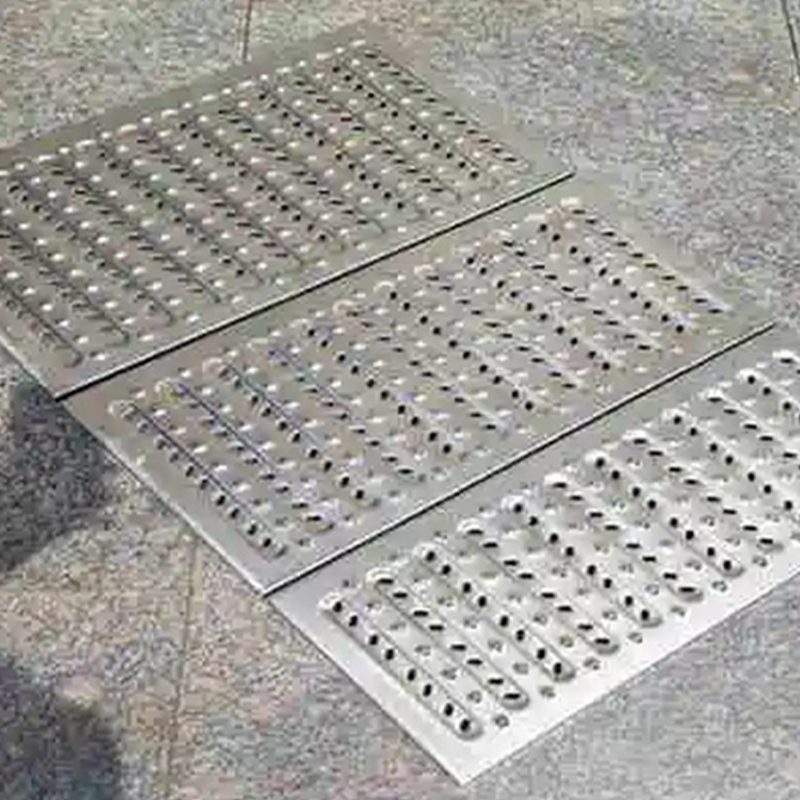

Engineered to address the long-term challenges of chemical erosion and structural aging in architect...
READ MOREMay 13, 2026
Content
A drainage channel is one of the most fundamental and critical infrastructure components in modern drainage systems. It collects surface water through a linear opening and directs water flow into the drainage network, thereby preventing waterlogging and protecting the structural integrity of buildings. Unlike traditional point drains, a drainage channel uses a linear drainage method that offers higher drainage efficiency and is applicable to a far wider range of scenarios.
Depending on structural form and application environment, drainage channel products are primarily classified into the following major types:
| Type | Key Features | Typical Application |
|---|---|---|
| Trench drain | Wide body, visible grating cover | Industrial plants, car parks, roads |
| Slot drain | Very narrow opening (typically 30 mm or less) | Indoor floors, public plazas |
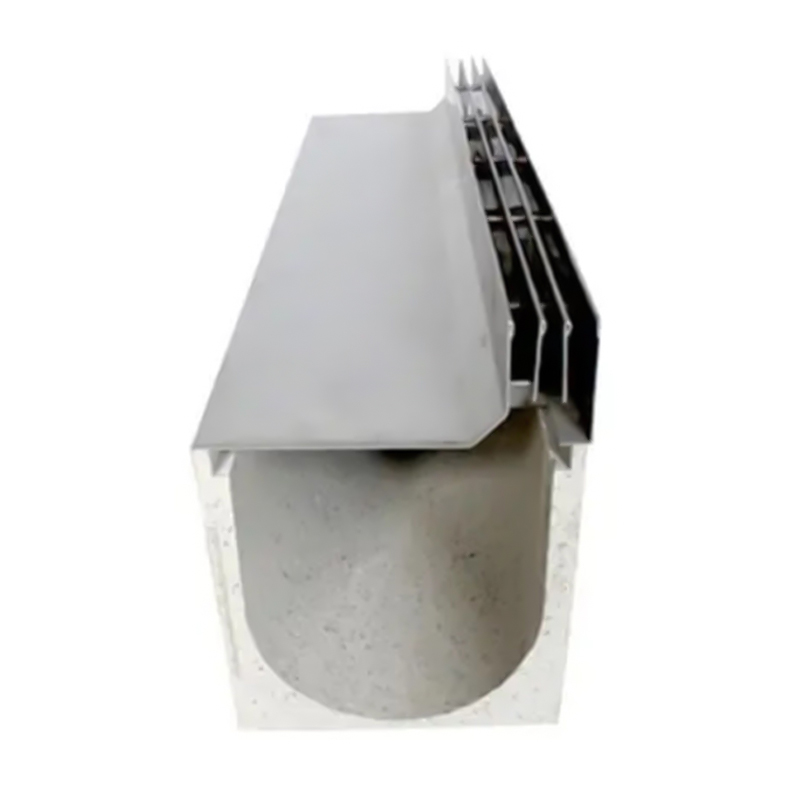
| Concrete drainage channel | Precast or cast-in-place concrete | Municipal engineering, heavy industry |
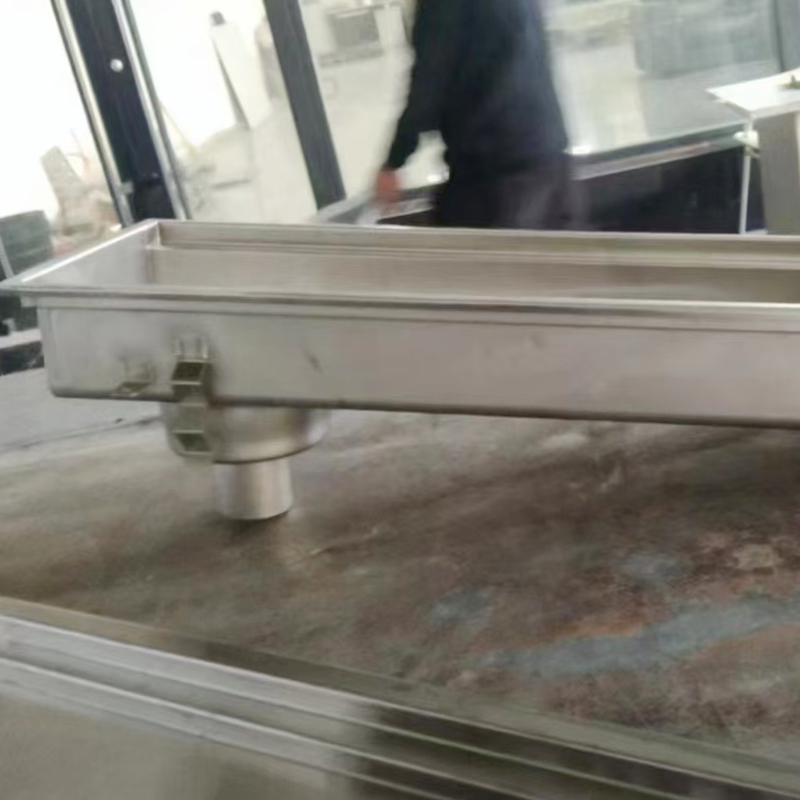
| Stainless steel trench drain | Stainless steel construction | Food processing, medical, commercial kitchens |
| Shallow drainage channel | Low-profile, minimal embedment depth | Hard surface renovation, shallow-foundation sites |
| Slimline drainage channel | Ultra-thin profile design | Gardens, patios, high-end finished spaces |
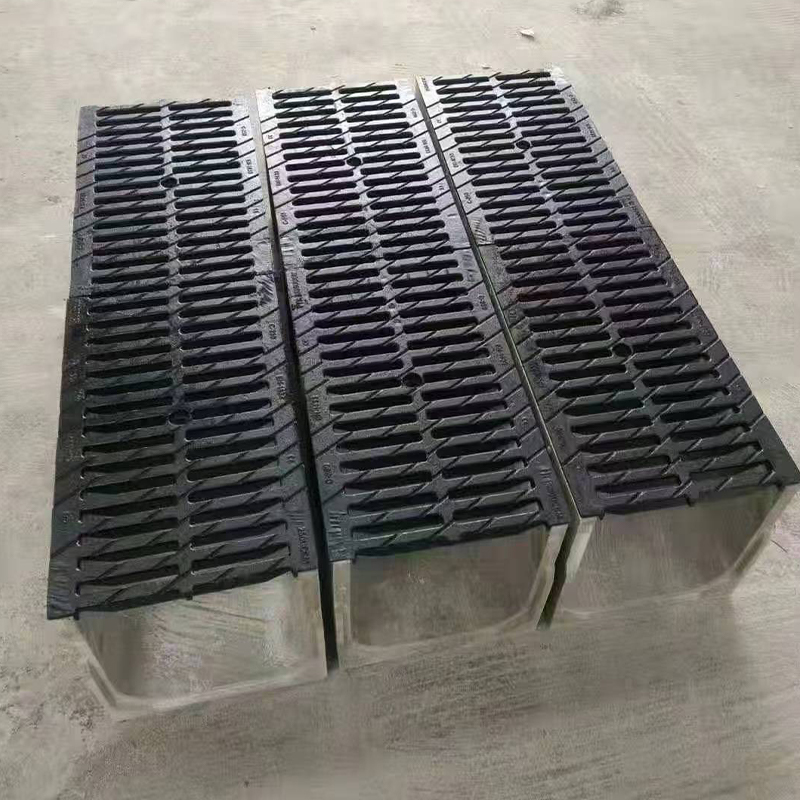
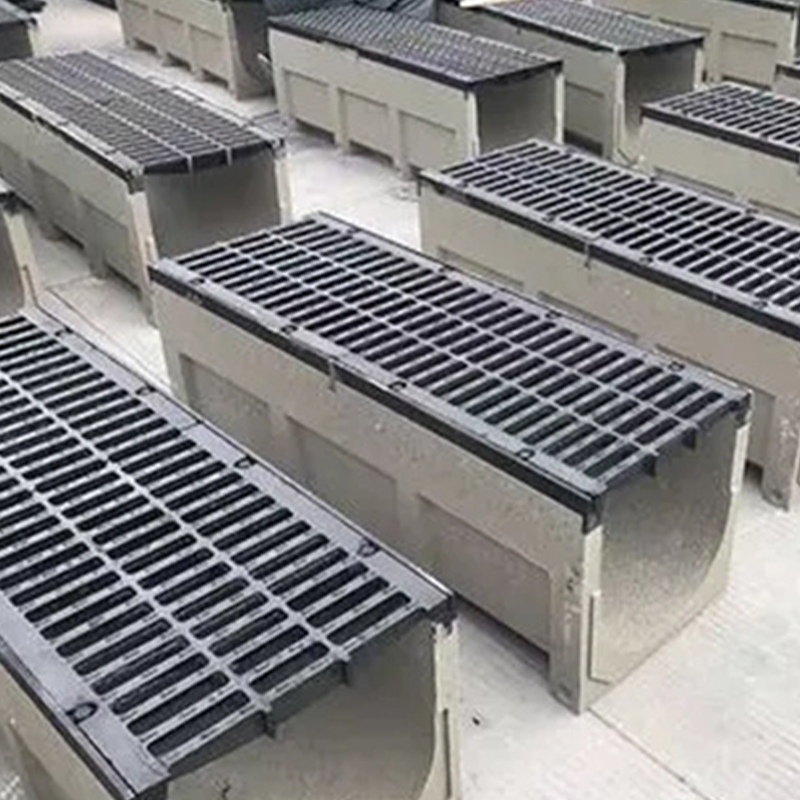
A trench drain is the most common form of linear drainage. Its channel body width typically ranges from 100 mm to 300 mm, and the top is covered with a grating. Grating materials include cast iron, galvanized steel, stainless steel, and composite materials. Load ratings span from A15 (pedestrian zones) to F900 (airport runways), and the correct rating must be selected based on the actual load environment.
A slot drain, by contrast, is defined by its concealed appearance. Its top opening is extremely narrow, typically only 15 mm to 30 mm wide, and it blends almost invisibly into the surrounding floor surface without sacrificing drainage performance. The internal channel body still offers generous capacity — only the inlet is compressed. This makes the slot drain widely adopted in high-end residential projects, boutique hotel lobbies, and urban plazas where aesthetic integration is paramount.
Core selection logic:
Where the area must bear vehicle loads, prioritize a trench drain with a heavy-duty grating or a concrete drainage channel. Where visual seamlessness is required, choose a slot drain or slimline drainage channel. Where food hygiene or medical cleanliness standards apply, specify a stainless steel trench drain. Where floor thickness is limited, a shallow drainage channel is the appropriate solution.
The concrete drainage channel is one of the most widely used channel types in the engineering sector. Raw materials consist of high-strength concrete that is either factory-precast and cured before being transported to site for assembly, or cast in place directly at the construction site.
Precast vs. Cast-in-Place Concrete Drainage Channel Comparison:
| Item | Precast concrete drainage channel | Cast-in-place concrete drainage channel |
|---|---|---|
| Construction period | Short — direct assembly on site | Long — formwork and curing required |
| Dimensional flexibility | Limited by mould dimensions | Fully customisable |
| Quality consistency | Factory-controlled, uniform quality | Subject to on-site conditions |
| Cost profile | Higher unit price, lower labour cost | Lower material cost, higher labour cost |
| Suitable projects | Standardised engineering projects | Irregular cross-sections, special dimensions |
Internal lining treatment of a concrete drainage channel is equally important. In chemical plants, wastewater treatment facilities, and similar environments that carry corrosive liquids, the interior of the concrete body must be coated with epoxy resin, polyurethane, or a polypropylene (PP) liner to extend service life and prevent corrosive fluids from attacking the concrete matrix.
In industries where drainage hygiene requirements are extremely demanding, the stainless steel trench drain is virtually the only viable choice. The material is typically Grade 304 or Grade 316 stainless steel. Grade 316 contains molybdenum, which provides superior resistance to chloride-ion corrosion, making it the preferred option for coastal installations or facilities that regularly use chlorine-based cleaning agents, such as food processing plants.
Key advantages of stainless steel trench drain:
The smooth surface resists bacterial growth and complies with HACCP food safety standards. A fully welded construction eliminates dead corners, making cleaning and sanitisation straightforward. Excellent chemical resistance allows the use of strong acid and alkaline cleaning agents. Under normal maintenance conditions, service life exceeds 20 years. The modern, clean appearance suits high-end commercial kitchen environments.
Gratings for a stainless steel trench drain are typically pressed or cast from the same grade of stainless steel. Certain models feature anti-theft locking clips, suitable for public toilets, catering facilities, and other locations with varied foot traffic.
The shower trench drain is a professional extension of the slot drain concept applied to bathroom environments. Conventional bathroom drainage relies on a central point floor drain that requires the floor to slope from all four sides toward the centre, making large-format tile installation difficult and limiting drainage speed. The shower trench drain repositions the drainage line to one side wall of the shower area, so only a single-direction gradient is needed. Full-size tiles can be laid without cuts, and the visual result is dramatically improved.
Shower trench drain installation reference parameters:
| Parameter | Typical Value |
|---|---|
| Channel length | 600 mm / 800 mm / 1000 mm / custom |
| Channel depth | 65 mm to 90 mm |
| Outlet pipe diameter | DN50 / DN75 |
| Floor gradient | 1% to 2% (10 mm to 20 mm drop per metre) |
| Maximum flow rate | Approx. 24 L/min (DN50 outlet) |
| Grating material | 304 stainless steel (standard) / 316 stainless steel (coastal/high corrosion) |
During installation, the waterproofing membrane must be carefully integrated with the shower trench drain body. The membrane must be turned up past the top edge of the channel on all sides to prevent water from seeping into the floor slab structure. Some products include a pre-fitted waterproofing flange that bonds directly to the membrane by heat welding, simplifying the process considerably.
Driveway drainage represents one of the highest load-demand applications for any drainage channel. A driveway drainage channel or driveway trench drain must withstand repeated wheel loading from passenger cars and light commercial vehicles while maintaining clear flow and stable gratings that do not shift or deform under pressure.
Load class and application correspondence (based on EN 1433 standard):
| Load Class | Maximum Axle Load | Typical Application |
|---|---|---|
| A15 | 1.5 tonnes | Pedestrian and cycle areas only |
| B125 | 12.5 tonnes | Private driveways, car parks |
| C250 | 25 tonnes | Road shoulders, pedestrian-adjacent zones |
| D400 | 40 tonnes | Public roads, truck access routes |
| E600 | 60 tonnes | Airport aprons |
| F900 | 90 tonnes | Aircraft runways |
A residential driveway trench drain rated to B125 is generally sufficient. Commercial car parks or logistics yard access routes should specify a D400-rated concrete drainage channel paired with heavy-duty ductile iron gratings to ensure long-term safety under sustained heavy loads.
The installation position of a driveway drainage channel is generally at the driveway entrance, at the base of a ramp, or directly in front of a garage door. These locations experience the highest concentration of surface runoff and serve as the critical barrier against water ingress into the garage interior.
Drainage management on outdoor patios and hard-landscaped garden surfaces has long challenged designers and homeowners. Conventional drainage holes disrupt the visual continuity of a surface, whereas the patio drainage channel has transformed this situation entirely.
A patio drainage channel is typically manufactured from polymer concrete, a composite material that combines the compressive strength of concrete with the corrosion resistance of resin. It weighs approximately 30% less than standard concrete and presents a smoother internal surface that accelerates flow velocity.
The slimline drainage channel is another popular option for patio settings. Its overall height is typically only 60 mm to 80 mm, making it well suited to retrofit installation on existing hard surfaces without extensive excavation. Grating designs are also more refined, and certain models allow custom tile or stone inserts matching the surrounding paving, producing a near-invisible finish.
Patio drainage channel installation considerations:
The overall patio gradient must not be less than 1% to ensure natural flow toward the channel. The top face of the channel should sit approximately 2 mm to 3 mm below the surrounding surface level to prevent water from bypassing the inlet. Anti-slip grating patterns should be selected to reduce the risk of slips in wet conditions.
In renovation projects where underground structures are complex or embedment depth is restricted, the shallow drainage channel demonstrates an irreplaceable advantage. Standard trench drain installation typically requires a depth of 200 mm or more, whereas a shallow drainage channel can be installed in as little as 80 mm to 120 mm, substantially reducing excavation volume and disturbance to existing subsurface structures.
The shallow drainage channel is widely used in the following scenarios: renovation of interior floors in older buildings where large-scale slab removal is not feasible; suspended floors or thin concrete slab areas; basement slabs that are too thin to permit deep excavation; and fast-track renovation projects with strict time constraints on construction work.
Industrial and commercial environments impose requirements on a drainage channel that far exceed those of ordinary residential applications. A heavy duty trench drain is specifically reinforced in terms of material, structure, and load design.
Heavy duty trench drain core performance specifications:
| Specification | Requirement |
|---|---|
| Load class | D400 to F900 |
| Channel body material | Precast concrete / polymer concrete / cast iron |
| Grating material | Ductile iron / 304 stainless steel / hot-dip galvanised steel |
| Unit length | 500 mm / 1000 mm / 1500 mm |
| Chemical resistance | Varies according to liner material |
| Accessories | End caps, cleanout units, reducing couplings, gradient adjustment shims |
A commercial trench drain places greater emphasis on system integrity and ease of maintenance. High-frequency-use locations such as commercial kitchens, car wash bays, and retail delivery areas require gratings that can be lifted quickly for access, channel bodies that are easy to clean manually or mechanically, and effective odour-blocking capability. Odour control is typically achieved through a water trap with a minimum seal depth of 50 mm, or through a mechanical sealed cover.
A single channel body cannot function independently. Complete trench drain systems rely on multiple components working together.
Standard components of trench drain systems:
Channel Body — The core element that carries and directs water flow.
Grating — Covers the channel opening, bears applied loads, and prevents debris from entering the system.
End Cap — Closes both ends of the channel body and directs flow toward the outlet.
Outlet — Connects the bottom of the channel to the drain pipe; standard sizes range from DN50 to DN200.
Access Unit (Cleanout) — Positioned at critical system nodes to facilitate maintenance and clearance of blockages.
Fall Creator — Where civil works cannot achieve the required drainage gradient, this component introduces a built-in slope within the channel system itself.
Sump / Sediment Bucket — Fitted at the outlet location to intercept silt and debris, protecting the downstream pipework.
When procuring trench drain systems, it is advisable to purchase the system as a complete assembly rather than sourcing individual components separately. This ensures that all interface standards between components are consistent, avoiding leakage or installation problems caused by dimensional incompatibility.
This is one of the most frequently asked questions among contractors and designers. The answer is: a gradient is ideal but not strictly mandatory.
Drainage within a drainage channel relies on gravity to carry water along the channel floor toward the outlet. If the channel is installed level (zero gradient), water will still drain but at a slower rate, and sediment accumulation inside the channel becomes more likely — particularly where surface runoff carries fine particles.
Recommended gradient parameters:
| Application | Recommended Gradient |
|---|---|
| Interior floors (clean water) | 0.5% (5 mm drop per metre) |
| Patios and gardens | 1% (10 mm drop per metre) |
| Driveways and car parks | 0.5% to 1% |
| Industrial floors (with solid particles) | 1% to 2% |
| Food processing facilities | 1% minimum, 1.5% recommended |
Certain trench drain systems incorporate a built-in gradient, where the channel floor descends progressively from one end to the other, eliminating the need to create a slope through civil works. These products are particularly practical in renovation projects on existing finished floors.
The connection between a drainage channel and the drain pipe is the joint in the entire drainage system most susceptible to problems, and it must be executed strictly in accordance with established procedure.
Connection steps:
Step 1 — Confirm outlet position and specification. The outlet at the base of the channel body may be vertical (bottom outlet) or horizontal (end outlet). The configuration must match the position of the downstream pipework.
Step 2 — Clear the pipe interface. Ensure the connection point is free of debris and rough edges.
Step 3 — Fit the sealing rubber ring. Insert the matching rubber seal at the interface to prevent leakage.
Step 4 — Insert the connecting pipe. Push the drain pipe into the outlet to the insertion depth specified in the product documentation, typically a minimum of 50 mm.
Step 5 — Secure and seal. Apply proprietary pipe sealant at the joint as a secondary seal, and use pipe clips where required to fix the pipe in position.
Step 6 — Conduct a water test. Once installation is complete, fill the channel with water and inspect the joint for leakage. Only after confirming watertightness should the surrounding floor finish be applied and the channel enclosed.
For connections involving a stainless steel trench drain, galvanic corrosion must also be considered. Stainless steel channel bodies must not come into direct contact with carbon steel pipework. An insulating gasket must be inserted between the two materials, or a PVC or HDPE drain pipe must be used as a transition connection.
Regardless of which type of drainage channel is selected, regular maintenance is essential to keep the drainage system operating correctly.
Recommended maintenance intervals:
| Location Type | Grating Cleaning | Channel Flushing | Full Inspection |
|---|---|---|---|
| Residential patio / driveway | Monthly | Quarterly | Annually |
| Commercial kitchen | Daily | Weekly | Quarterly |
| Industrial facility | Weekly | Monthly | Every 6 months |
| Municipal road | Quarterly | Every 6 months | Annually |
A properly maintained concrete drainage channel can achieve a service life of 30 to 50 years. A stainless steel trench drain under normal use and maintenance conditions typically lasts 20 to 30 years. Polymer concrete channels generally offer a service life of 20 to 40 years. Gratings, as the component most subject to wear, should be considered for replacement every 5 to 15 years depending on material and load conditions.
In industrial wastewater and effluent treatment, the drainage channel plays a vital role in collecting and conveying production waste liquids. Channels used for this purpose carry specific material and structural requirements: they must provide sufficient corrosion resistance to prevent hazardous liquids from permeating into the ground, and they must be integrated with downstream wastewater treatment equipment such as oil interceptors and neutralisation tanks.
A drainage channel designed for industrial waste effluent must generally satisfy the following conditions: the internal channel surface must be fully corrosion-protected, with material options including fibreglass-reinforced plastic (FRP), PP-lined concrete, or full stainless steel construction. Inspection chambers must be provided at regular intervals to allow water quality sampling and system maintenance. Flow containment devices must be incorporated to prevent large-scale spills in the event of an accident. The system must comply with local environmental regulations governing the technical standards for waste liquid collection infrastructure.
In the food service sector, the patio drainage channel and commercial trench drain, when used in combination with grease interceptors, represent the established approach to managing fat-laden wastewater and satisfying municipal sewer connection requirements.
European Committee for Standardization. EN 1433: Drainage channels for vehicular and pedestrian areas — Classification, design and testing requirements, marking and evaluation of conformity. Brussels: CEN, 2002.
European Committee for Standardization. EN 1253: Gullies for buildings — Requirements, testing and marking. Brussels: CEN, 2015.
British Standards Institution. BS EN 124: Gully tops and manhole tops for vehicular and pedestrian areas — Design requirements, type testing, marking, quality control. London: BSI, 2015.
American Society of Civil Engineers. ASCE 7-22: Minimum Design Loads and Associated Criteria for Buildings and Other Structures. Reston, VA: ASCE, 2022.
Hazard Analysis and Critical Control Points (HACCP) Codex Alimentarius Commission. General Principles of Food Hygiene CXC 1-1969, Revised 2020. Rome: FAO/WHO, 2020.
ACO Group. Technical Planning Guide: Linear Drainage Systems. Büdelsdorf: ACO Iberia, 2021.
Polymer Concrete Technical Institute. Design and Application Manual for Polymer Concrete Drainage Products. 3rd ed. Atlanta: PCTI, 2019.
International Association of Plumbing and Mechanical Officials. Uniform Plumbing Code. Walnut, CA: IAPMO, 2021.
National Fire Protection Association. NFPA 820: Standard for Fire Protection in Wastewater Treatment and Collection Facilities. Quincy, MA: NFPA, 2020.
Stainless Steel Advisory Service. Selecting the Right Grade of Stainless Steel for Drainage Applications. Sheffield: SSAS, 2020.
Related Products
Engineered to address the long-term challenges of chemical erosion and structural aging in architect...
READ MOREEngineered to address the long-term challenges of chemical erosion and structural aging in architect...
READ MOREEngineered to address the long-term challenges of chemical erosion and structural aging in architect...
READ MOREEngineered to address the long-term challenges of chemical erosion and structural aging in architect...
READ MOREEngineered to address the long-term challenges of chemical erosion and structural aging in architect...
READ MOREEngineered to address the long-term challenges of chemical erosion and structural aging in architect...
READ MORE
Contact us
Factory Address
Group 12, Quanxin Village, Donghai Town, Qidong City, Nantong City, Jiangsu Province, China
phone
+86-13914963840
+86-13451754670
products
QR CODE
 Wholesale Drainage Ditch Manufacturers