 English
 Español
 عربى
عربى


Engineered to address the long-term challenges of chemical erosion and structural aging in architect...
READ MOREJul 14, 2026
Site & Drainage — Field Notes
A close look at why the shape of a drain — not the price tag — decides whether your driveway stays dry.
For most driveway installations, a drainage channel outperforms a standard surface drain in terms of water capture width, load-bearing strength, and long-term reliability. A drainage channel — also called a trench drain or channel drain — is a linear system that runs across the full width of a driveway, capturing runoff along an entire line rather than at a single low point. A surface drain, by contrast, is typically a single grated inlet installed at one location, relying on the surrounding surface to be graded correctly so water flows toward it.
For driveways with vehicle traffic, slopes, or heavy seasonal rainfall, the linear coverage of a drainage channel is usually the more dependable choice, though surface drains still have a place in smaller, flatter, low-traffic areas where budget is the primary concern. The right answer ultimately depends on driveway size, slope, material, local rainfall intensity, and vehicle load.
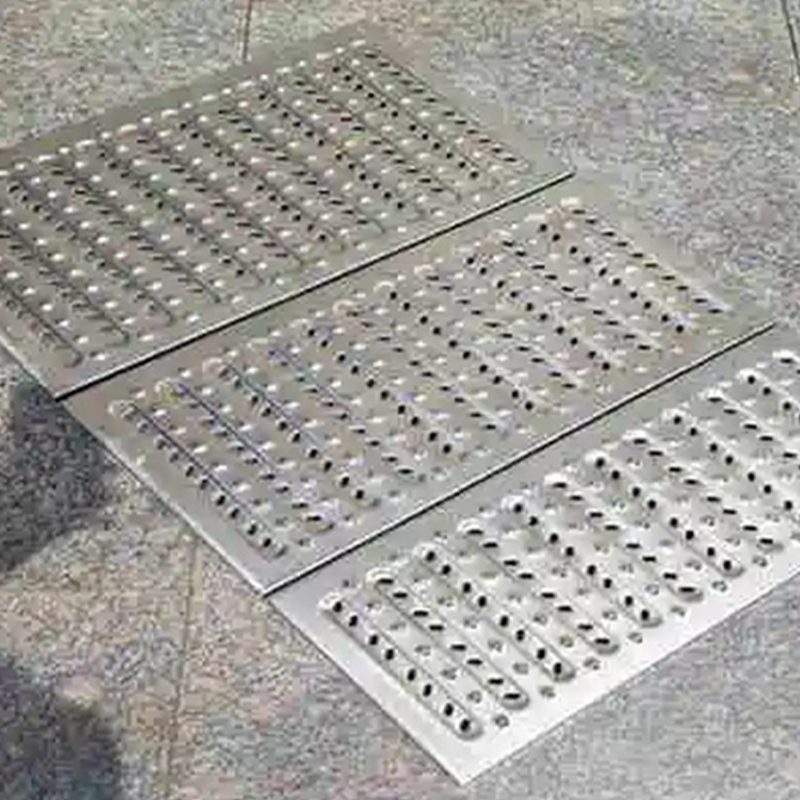
A surface drain is usually a circular or square grate connected to a pipe that carries water away underground. It works well when a driveway has a clear low point where water naturally pools, and it depends heavily on correct grading to funnel water toward that single collection point.
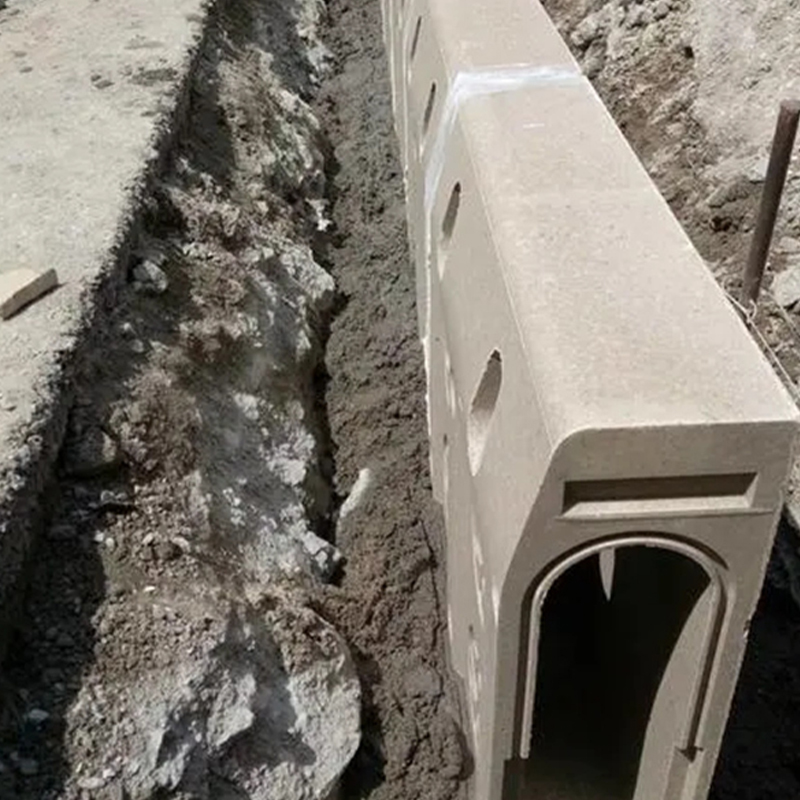
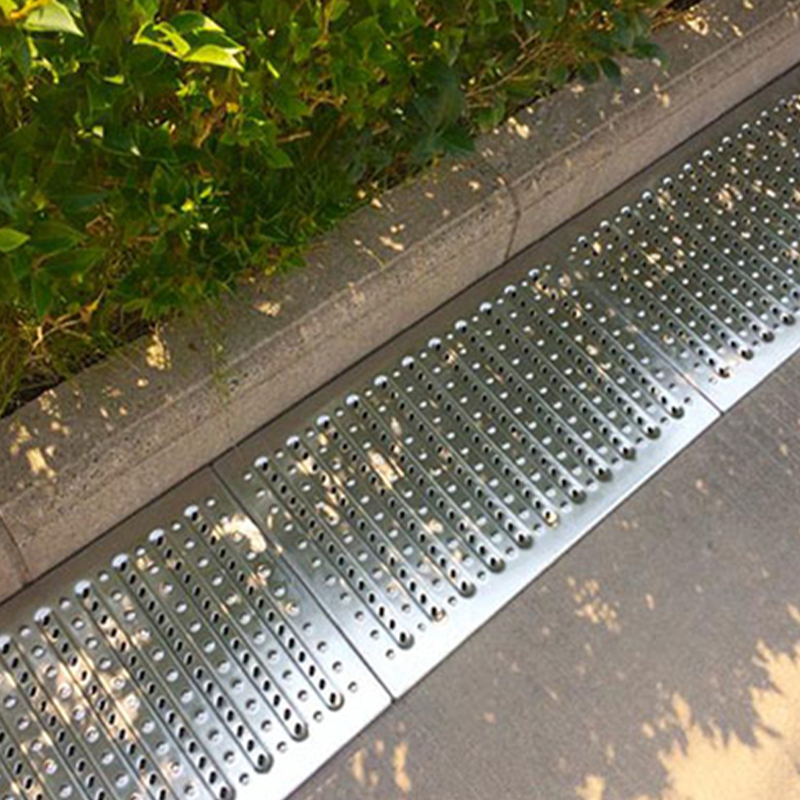
A drainage channel, on the other hand, is a continuous trough set into the surface, usually spanning the width of a driveway or parking apron. Water is intercepted along the entire length of the trough rather than at one spot, which means the system is far less dependent on perfect surface grading — especially useful where water moves quickly and can bypass a single grate before it has a chance to drain.
The single biggest practical difference between the two systems is capture width. A surface drain grate might measure roughly 6 to 12 inches across, meaning it can only intercept water that reaches that exact point. A drainage channel can run 10 to 20 feet or more across a driveway, intercepting water continuously along that entire span.
A driveway that slopes toward the street can generate a fast-moving sheet of water — if it reaches a single surface drain a fraction of a second too late, it simply flows past and onto the road.
This is why many municipalities and commercial property codes specifically require a linear system at driveway entrances rather than a point drain.
| Factor | Surface Drain | Drainage Channel |
|---|---|---|
| Typical capture width | 6–12 inches | Full driveway width |
| Grading sensitivity | High | Low |
| Vehicle load rating | Moderate | High, with proper grate class |
| Best suited slope | Flat to slight | Flat to steep |
Driveways carry repeated vehicle weight, and this is another area where the two systems diverge. Surface drains are generally rated for light to moderate loads, which works fine for a single passenger car crossing occasionally. Repeated heavy traffic — delivery trucks, multiple vehicles per household — can stress the grate frame and surrounding pavement over time, sometimes leading to cracking around the drain's edges.
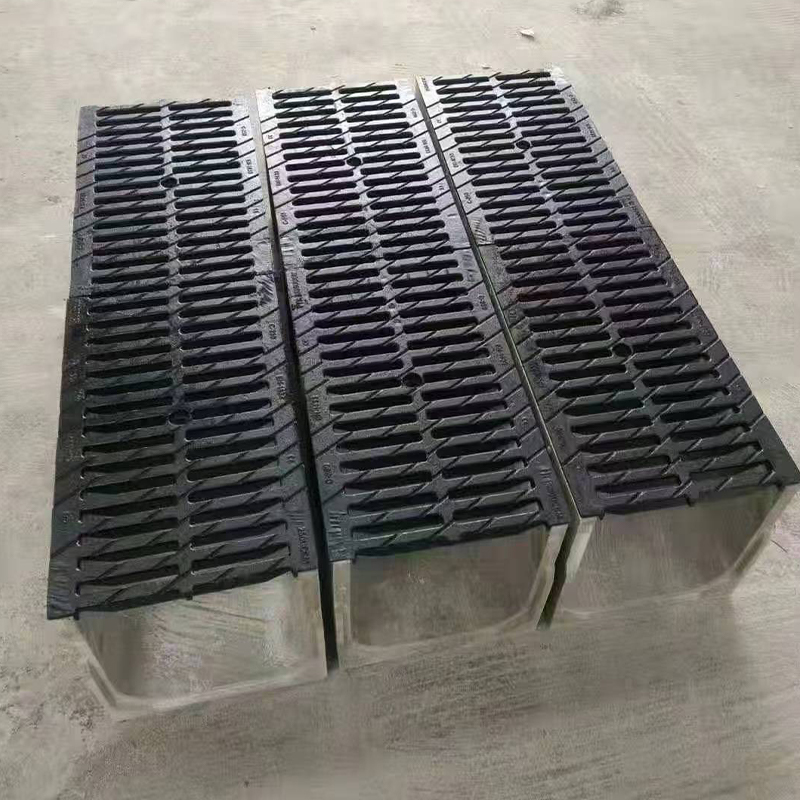
Drainage channels are usually manufactured with a rigid frame that distributes load evenly across the length of the trough, and many are available with reinforced grates rated for heavier traffic classes. This makes them a common choice for commercial entrances, loading docks, and parking structures.
Drainage channels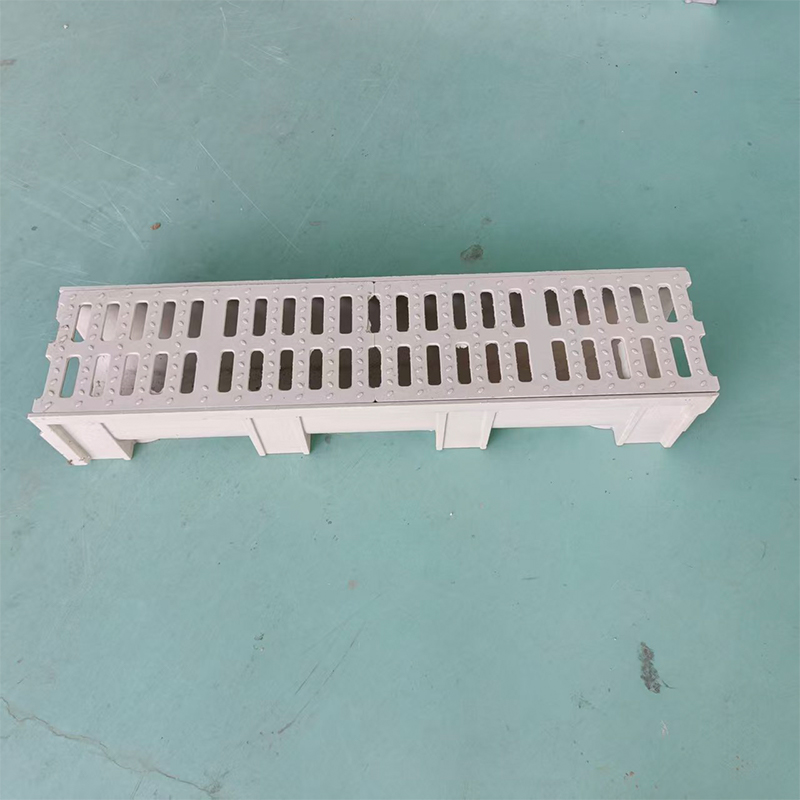
Warning
A lightweight grate on a driveway that regularly carries heavy vehicles is one of the most common causes of early frame cracking and grate sag.
Installing drainage channel systems typically involves cutting a continuous trench across the driveway, setting the channel body level and secured in a concrete bed, then connecting the outlet to an underground pipe leading to a suitable discharge point. Because the channel spans the driveway, precise longitudinal grading matters less, but the trench itself needs to be dug accurately so the top of the channel sits flush with the finished surface.
Surface drain installation is comparatively simpler in scope, since it only requires excavating a smaller pit rather than a full trench — though the surrounding surface must be graded carefully in multiple directions so water actually reaches that single point.
Info
A misaligned outlet slope is the single most common installation error — even a well-built channel will pool water if the outlet pipe doesn't fall continuously toward the discharge point.
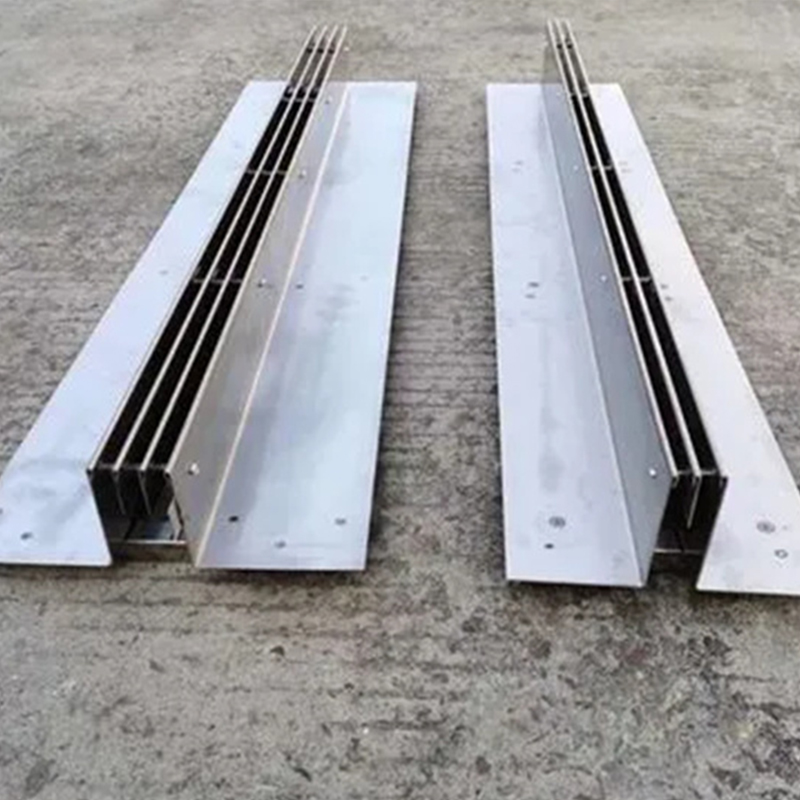
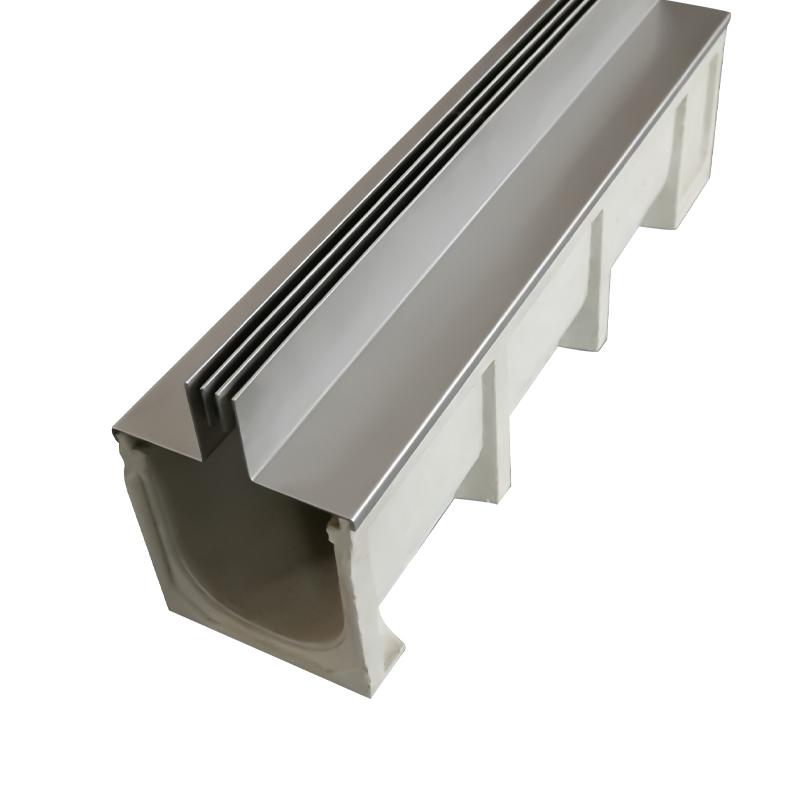
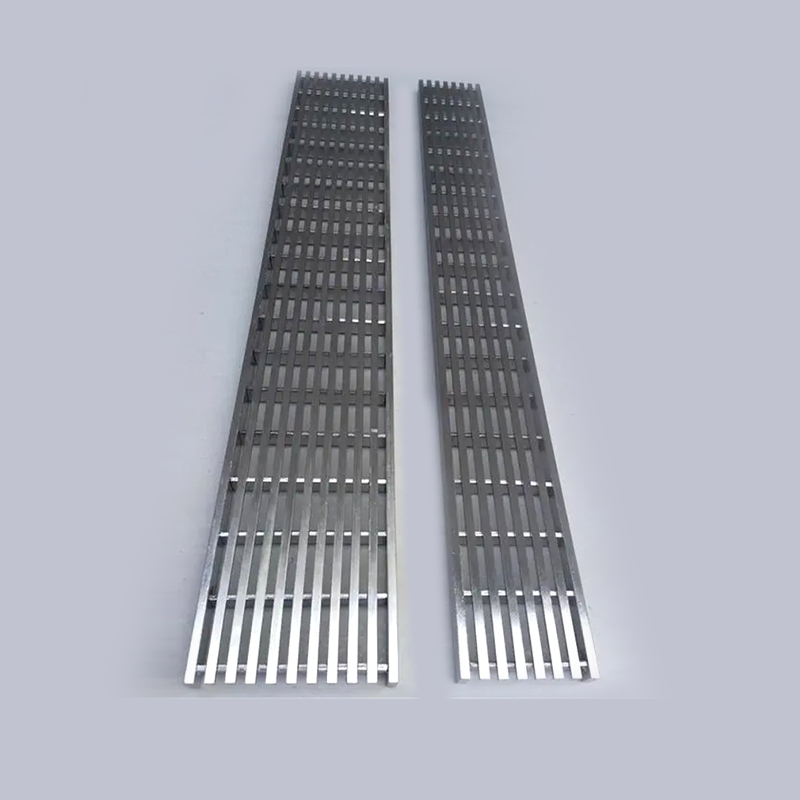
Not all drainage channels look the same. Standard channels use a visible grate that sits at surface level, offering strong flow capacity and easy visual inspection. A slot drainage channel, by contrast, uses a narrow surface opening — often just a few centimeters wide — with the wider water-carrying body concealed below the surface. This gives driveways a cleaner, more minimal appearance since the drain line is barely visible from above, which is a common reason homeowners and architects choose a slot drainage channel for entrances, modern driveways, or areas where aesthetics matter alongside function.
The tradeoff is that a slot drainage channel generally requires more careful cleaning, since debris can be harder to remove from a narrow opening compared to a standard grated channel. For driveways with heavy leaf fall or loose gravel nearby, a wider grate style is often more practical.
Success
Pairing a slot drainage channel with a removable silt bucket at the outlet keeps the narrow opening clear without sacrificing the clean sightline it's chosen for.
Surface drains are typically less expensive up front because they require less material and a smaller excavation area. For a small, flat driveway with a single obvious low point, this can make a surface drain the more budget-friendly option.
Drainage channels cost more initially due to the length of trench, the channel body itself, and the additional bedding material required. However, this upfront cost often pays off over time by reducing water damage risk to the driveway surface, foundation, or garage entrance, since the wider capture area lowers the chance of overflow during intense rainfall. It helps to think in terms of risk reduction rather than price per foot alone.
Danger
Skipping a drainage system entirely on a sloped driveway that empties toward a garage or foundation risks water intrusion that can cost far more to repair than any drain installation.
| Driveway Scenario | Recommended System |
|---|---|
| Flat, small residential driveway | Surface drain |
| Sloped driveway toward garage | Drainage channel |
| Commercial entrance or parking apron | Drainage channel |
| Modern paved driveway prioritizing appearance | Slot drainage channel |
| High rainfall or storm-prone region | Drainage channel |
A drainage channel is generally the stronger option for driveways that slope, carry regular vehicle traffic, or sit in a region with heavy rainfall, since its full-width capture reduces dependence on perfect grading and handles larger volumes of water more reliably. A surface drain remains a reasonable, lower-cost solution for small, flat driveways with a clear natural low point and lighter traffic.
Matching the system to the driveway's slope, size, and expected water volume — rather than defaulting to the cheaper option — is the most effective way to prevent pooling, ice buildup, and long-term surface damage.
Related Products
Engineered to address the long-term challenges of chemical erosion and structural aging in architect...
READ MOREEngineered to address the long-term challenges of chemical erosion and structural aging in architect...
READ MOREEngineered to address the long-term challenges of chemical erosion and structural aging in architect...
READ MOREEngineered to address the long-term challenges of chemical erosion and structural aging in architect...
READ MOREEngineered to address the long-term challenges of chemical erosion and structural aging in architect...
READ MOREEngineered to address the long-term challenges of chemical erosion and structural aging in architect...
READ MORE
Contact us
Factory Address
Group 12, Quanxin Village, Donghai Town, Qidong City, Nantong City, Jiangsu Province, China
phone
+86-13914963840
+86-13451754670
products
QR CODE
 Wholesale Drainage Ditch Manufacturers