 English
 Español
 عربى
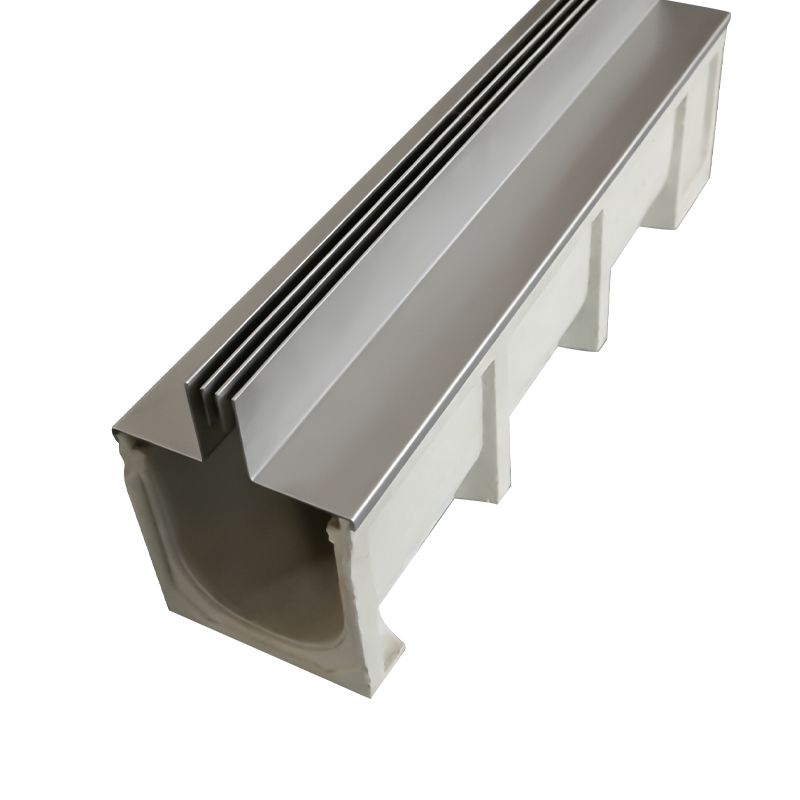
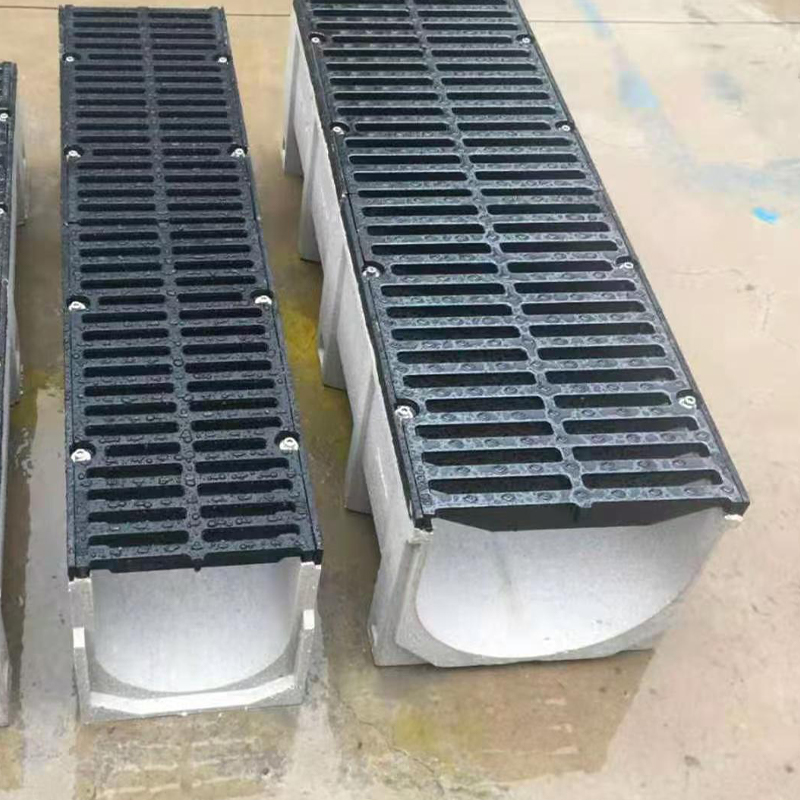
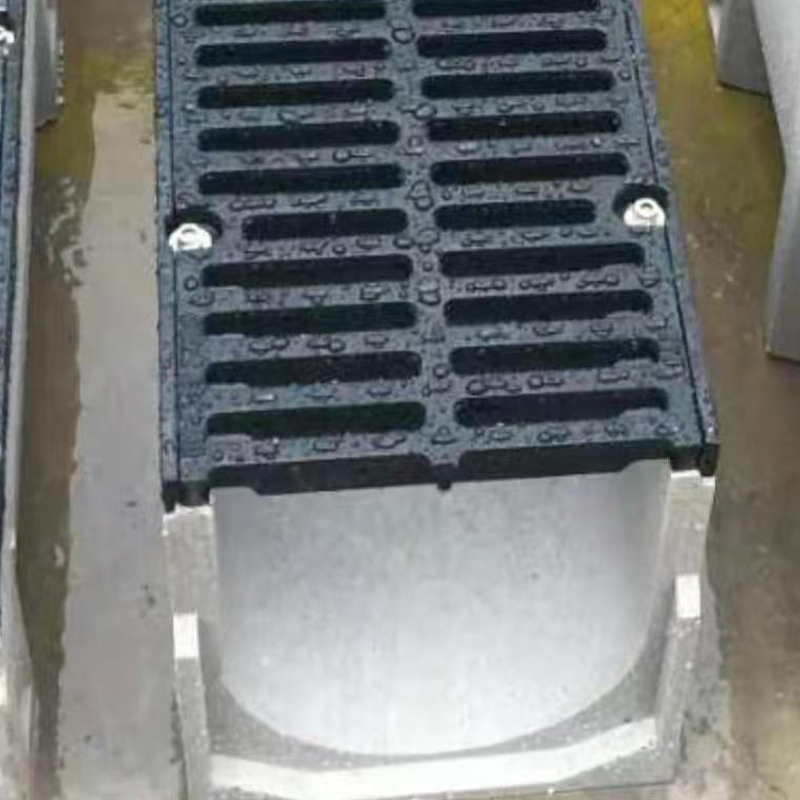
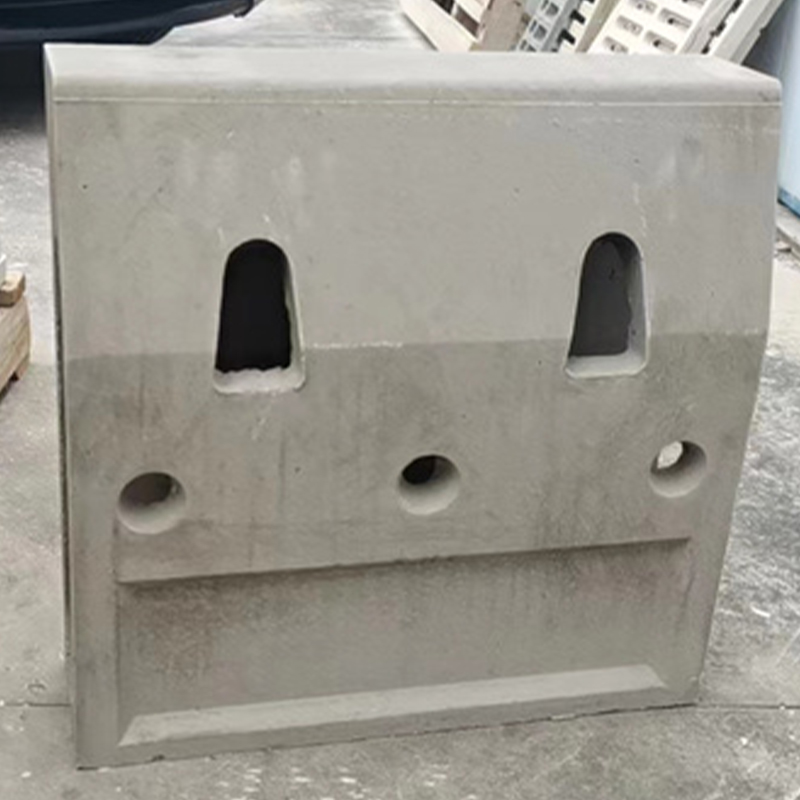

The Minimalist Linear GRC door and window frames are specifically designed for architectural project...
READ MORESep 21, 2026
Content
Design guidance
Drainage channel design: the decisions that decide performance
A practical guide to sizing, load class, material and grating—so the channel you specify still works in ten years.
A delivery bay that ponds after every storm. A pedestrian plaza where stainless steel covers have worked loose. A service road where the channel collapsed under the first loaded truck. In each case, the failure was not an accident on site—it was decided weeks earlier at the drawing board.
Drainage channel design is the quiet discipline of moving water off hard surfaces before it becomes a problem. Done well, it is invisible: pavements stay dry, covers sit flush. Done poorly, it produces flooding, trip hazards, structural damage and expensive retrofits.
This guide covers the decisions that matter most—hydraulic sizing, load class, material, grating, and the procurement traps that can undermine a good specification.
A drainage channel has three obligations. It must capture surface runoff, convey it to a discharge point, and carry the loads that pass over it. Every decision that follows—width, gradient, material, cover type—belongs to one of these three tasks.
Capture depends on how quickly water can enter the channel. A continuous slot collects runoff gradually along its length, while a grated inlet admits more water across discrete openings. Conveyance depends on internal shape and fall. Structural integrity depends on the load class of the complete assembly.
Standards make these duties measurable. EN 1433 governs complete drainage channel systems; EN 124 classifies the load capacity of covers and gratings. The engineer of record decides which standard applies, and that decision drives both the calculation and the documentation you need at handover.
Water will always find the lowest point on a paved surface. The designer's job is to make sure the lowest point is a drainage channel.
Sizing is where drainage design becomes quantitative. The rational method used by engineers is simple in concept: peak runoff equals catchment area times rainfall intensity times a runoff coefficient for the surface.
In practice, measure every surface that drains toward the channel. Agree on the design storm—a one-in-five-year event for car parks, one-in-ten or heavier for roads. Apply the runoff coefficient: concrete and asphalt shed 0.85–0.95 of the rainfall, while gravel and planting absorb more. The result is a design flow rate in litres per second.
The channel is then selected so that, at the specified gradient, it keeps velocity in the self-cleaning range of roughly 0.7–1.0 metres per second. Below about 0.5 m/s, sediment settles; above about 2.5 m/s, erosion and noise increase. For smooth-walled resin channels, the minimum fall is usually about 1:100; for rougher precast concrete, 1:50 is safer.
Treat gradient as a design parameter, not a construction detail. Invert levels must be marked on the drawing, because the channel has to lie to its designed fall from the first unit. Correcting a flat channel later by bedding it up with mortar is a recipe for ponding.
The most expensive mistake in drainage specification is a load-class mismatch. A channel is not rated for the car that parks on it daily; it is rated for the heaviest vehicle that will ever cross it, including delivery trucks, fire appliances and maintenance vehicles. EN 124 defines the classes used across most international projects:
| Class | Typical application | Where you'll see it |
|---|---|---|
| A15 | Pedestrians and cyclists | Plazas, walkways |
| B125 | Light vehicles | Car parks, driveways |
| C250 | Slow-moving traffic | Service bays, forecourts |
| D400 | General road traffic | Public roads, loading docks |
| E600 | Industrial heavy traffic | Factory yards, ports |
| F900 | Extreme aircraft loads | Runways, aprons |
Two rules follow. First, the body and grate must be rated for the same class: a D400 body with a B125 grate remains a B125 system, because failure begins at the weakest component. Second, the rating applies to the installed assembly—bedding, surround concrete and edge restraint all contribute. A correctly rated channel poured into weak surround can still shift under traffic.
Where loads are heavy or dynamic, specify a verified high-loadbearing linear channel and request the test report to support the selection.
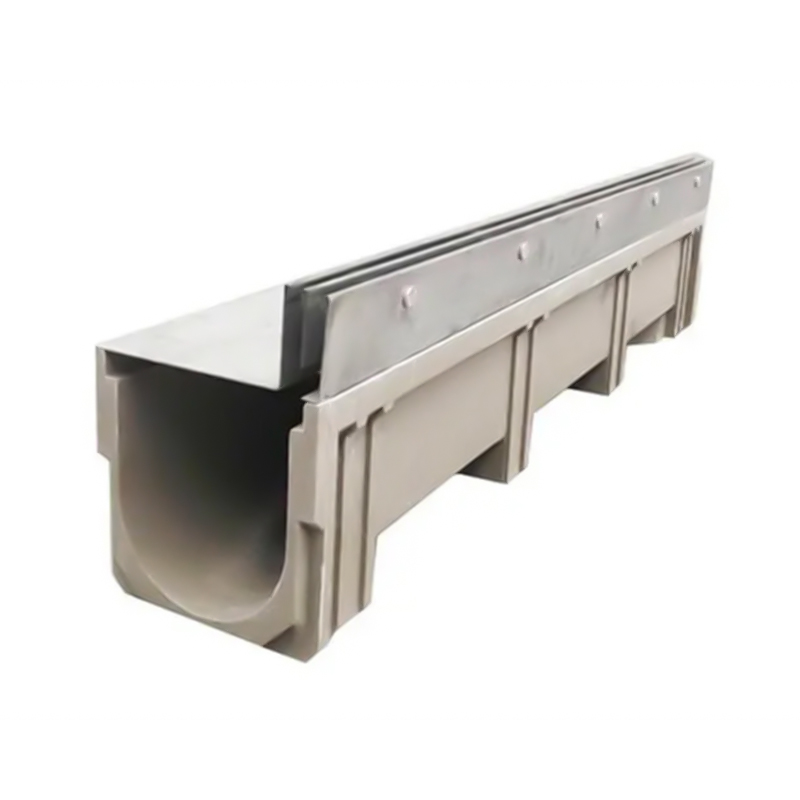
 High Load-Bearing Linear Drainage Channel for Heavy-Duty AreasThis product is highlighted for projects with heavy or dynamic loads. It claims to support trucks and machinery without deformation, using durable materials, and includes anti-slip grating for safety.View Product →
The material choice fixes the project's weight, corrosion margin, hydraulic smoothness, appearance and long-term cost. There is no universal best material—only the best material for a particular site.
Resin concrete, also called polymer concrete, binds aggregates with a synthetic resin. It is lighter than ordinary concrete yet higher in compressive strength, and it resists the chlorides, de-icing salts and chemical spillage that attack steel-reinforced concrete. Its smooth internal wall improves flow, so a smaller section often does the work of a larger precast unit.
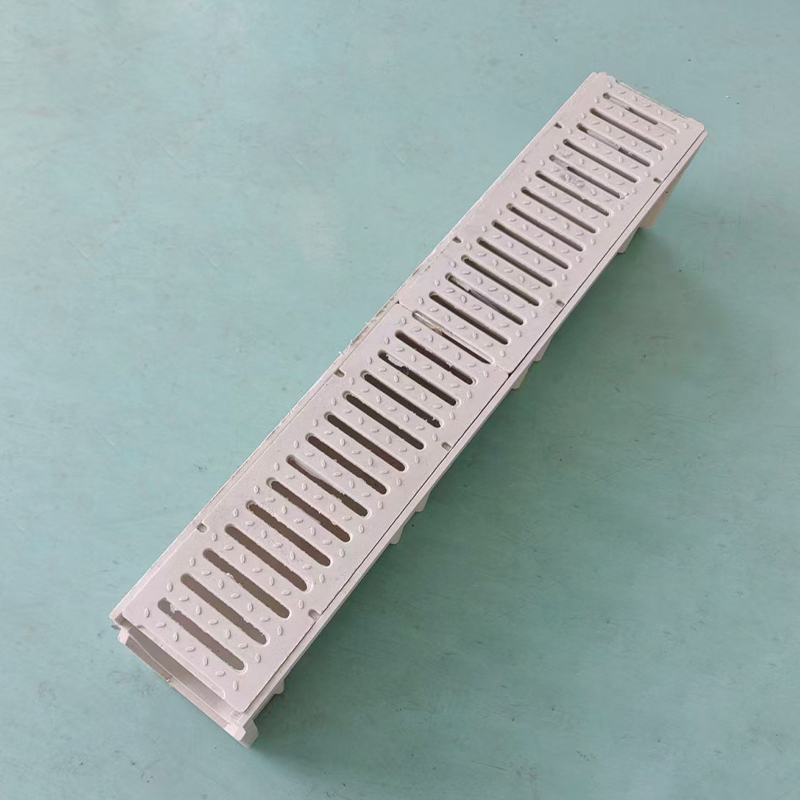
 Corrosion-Resistant Resin Drainage Channel for Industrial UseThis resin channel suits environments where chemicals, salts, and acids are present. It is lightweight yet strong, offers corrosion resistance, and supports versatile applications from municipal roads to factories.View Product →
Stainless steel is the standard for architectural and food-safe environments where rust staining is unacceptable and the channel forms a visible line in the paving. A well-specified stainless channel keeps its appearance for decades with minimal maintenance.
Ductile iron and cast-iron gratings remain the workhorses for extreme impact. Cast iron is brittle under shock, which is why ductile iron is preferred for airport aprons, docks and industrial access.
| Material | Corrosion behaviour | Typical use |
|---|---|---|
| Resin concrete | Excellent against salts and chemicals | Industrial, coastal, chemical exposure |
| Stainless steel | Excellent, especially grade 316 | Architecture, food, visible paving |
| Ductile iron | Good, requires coating care | Airports, ports, heavy industry |
The grate is the part of the system that users see and step on, yet it is often chosen last. It shapes safety, maintenance and the architectural quality of the surface.
Slot channels have a continuous narrow opening. They are heel-safe, visually quiet, and suit plazas where the drain should disappear into the surface. Grating channels use discrete openings, admit more water and are easier to clean—a better fit for roads with heavy debris loads.
Three details deserve attention: opening width below roughly eight millimetres in pedestrian paving to protect heels and castors, anti-slip treatment on ramps and industrial walkways, and locking mechanisms to prevent theft of easy-to-lift gratings.
For architectural paving and high-traffic floors, a stainless steel channel with strong loadbearing capacity provides both the refined appearance and the structural margin.
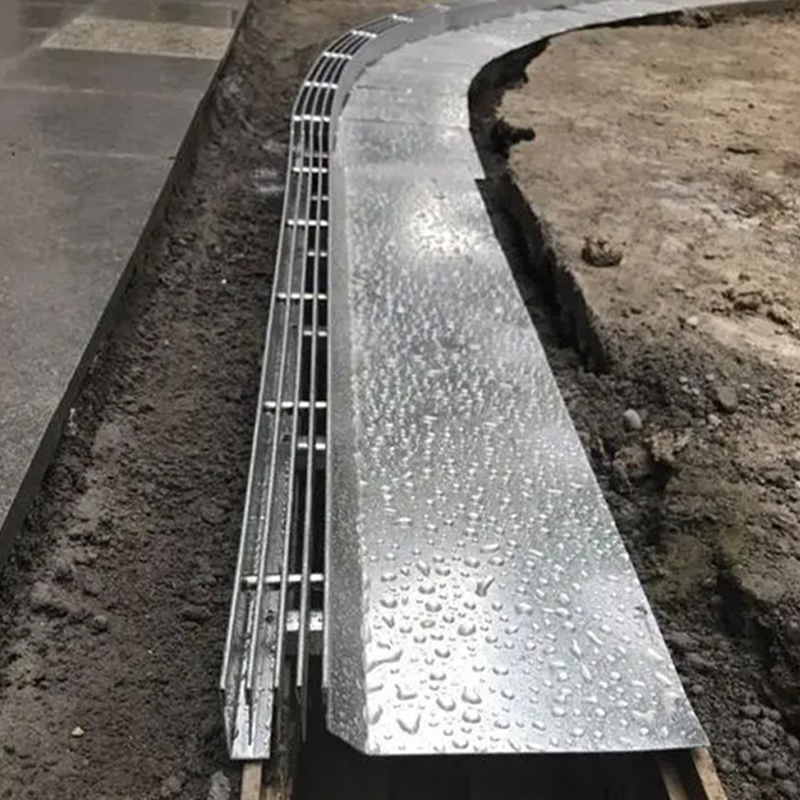
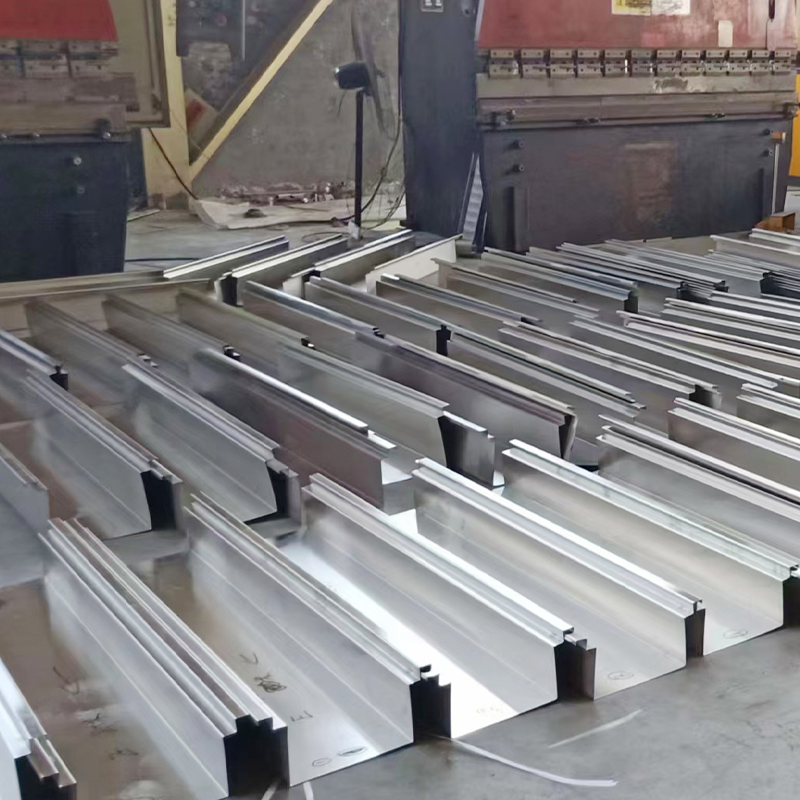 Stainless Steel Drainage Ditch with Strong Load-Bearing CapacityThis stainless steel channel is recommended for architectural paving and high-traffic floors. It is made from 304 or 316 stainless steel, offers corrosion resistance, and comes in specified inner widths and heights.View Product →
Most drainage failures trace back to a small set of recurring errors. Check your specification against each of them.
The "or equivalent" clause is a related trap. If substitutions are allowed, define which dimensions, load class and documents the substitute must match.
A specification is only as good as its verifiability on site. Run through this checklist before you tender the drawing:
Once the specification is final, installation decides the outcome. Our step-by-step guide to installing channel drainage covers excavation, bedding, surround concrete and jointing.
A drainage channel is the least glamorous component of a paved project, and one of the most unforgiving. It takes the heaviest loads, receives the dirtiest water and is expected to survive every season for decades. The design phase is the cheapest moment to solve its problems; once the concrete is poured, every correction is expensive.
Start with the catchment and the traffic, choose the load class and material deliberately, and require documentation you can verify. When the drawing is ready, talk to the manufacturer—one that shares test data, installation methods and honest advice is worth more than the lowest quote.
For a closer look at the range, from heavy-duty ductile iron to architectural stainless steel, browse the complete drainage channel series.
Related Products
The Minimalist Linear GRC door and window frames are specifically designed for architectural project...
READ MOREThe Minimalist Linear GRC door and window frames are specifically designed for architectural project...
READ MOREThe Minimalist Linear GRC door and window frames are specifically designed for architectural project...
READ MOREThe Minimalist Linear GRC door and window frames are specifically designed for architectural project...
READ MOREThe Minimalist Linear GRC door and window frames are specifically designed for architectural project...
READ MOREThe Minimalist Linear GRC door and window frames are specifically designed for architectural project...
READ MORE
Contact us
Factory Address
Group 12, Quanxin Village, Donghai Town, Qidong City, Nantong City, Jiangsu Province, China
phone
+86-13914963840
+86-13451754670
products
QR CODE
 Wholesale Drainage Ditch Manufacturers