 English
 Español
 عربى
عربى



Our Modular GRC System merges installation speed with long-term durability, providing a high-perform...
READ MOREAug 10, 2026
Content
A patio slab is already set, the paving build-up is only 100 mm thick, and rainwater is pooling at the threshold. A standard 200 mm deep trench drain cannot fit in that space. The direct solution is a shallow concrete drainage channel, which collects surface water without requiring the excavation depth of a conventional channel.
In practical terms, a shallow concrete drainage channel is a prefabricated trough with a total body depth of roughly 60 mm to 120 mm. It is not a replacement for a heavy-duty deep drainage system. It solves a different problem: removing stormwater from spaces where the depth below the finished surface is severely restricted.
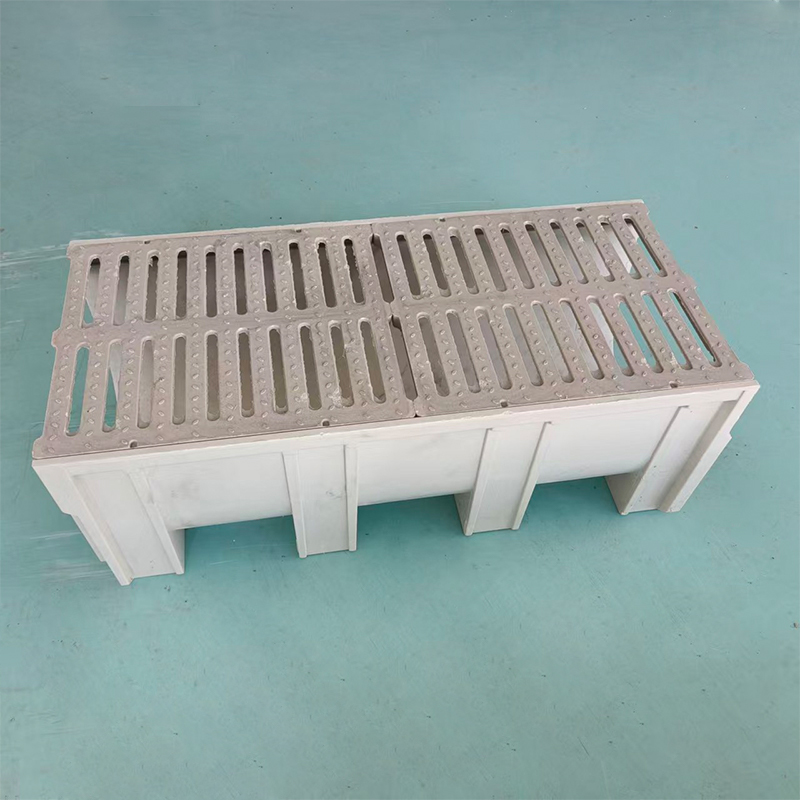
A shallow concrete drainage channel is supplied in short sections, usually with a U-shaped or V-shaped invert. Water enters through a slotted grate or an open top, travels along the slope of the channel, and exits through a single outlet pipe. Unlike a buried pipe, the channel itself is the collection point, so it catches surface runoff along its entire length.
The core components are simple:
Because the internal volume is small, the slope does most of the work. Before selecting dimensions, it helps to understand what a drainage channel is and how a trench drain system differs from conventional pipe drainage.
The most common mistake is to treat "shallow" as "light duty". Depth does not determine load capacity on its own. Stiffness comes from wall thickness, rib geometry, and the material used. A 75 mm deep resin concrete channel with thick walls can carry more than a 200 mm deep thin-walled channel. Therefore, the EN 124 load class should be matched to the traffic that will actually cross the drain.
| Load class | Typical application | Suitability for shallow channels |
|---|---|---|
| A15 | Pedestrian footpaths, cycle tracks, patios | Common; no vehicle loads. |
| B125 | Car parks, light vehicles | Possible with reinforced walls or resin concrete. |
| C250 | Driveways, slow-moving vans, service yards | Less common in ultra-shallow profiles; check wall thickness. |
| D400 | Carriageways, emergency routes | Usually not available as a shallow concrete channel; choose a standard-depth body. |
The practical implication is simple: if a vehicle will cross the channel, choose a product that is tested to at least B125, and preferably C250, rather than simply a product that fits in a thin paving build-up.
Where a shallow profile must still cope with light vehicles, a high-load-bearing capacity linear drainage channel offers a reinforced body without increasing the overall depth of the build-up.
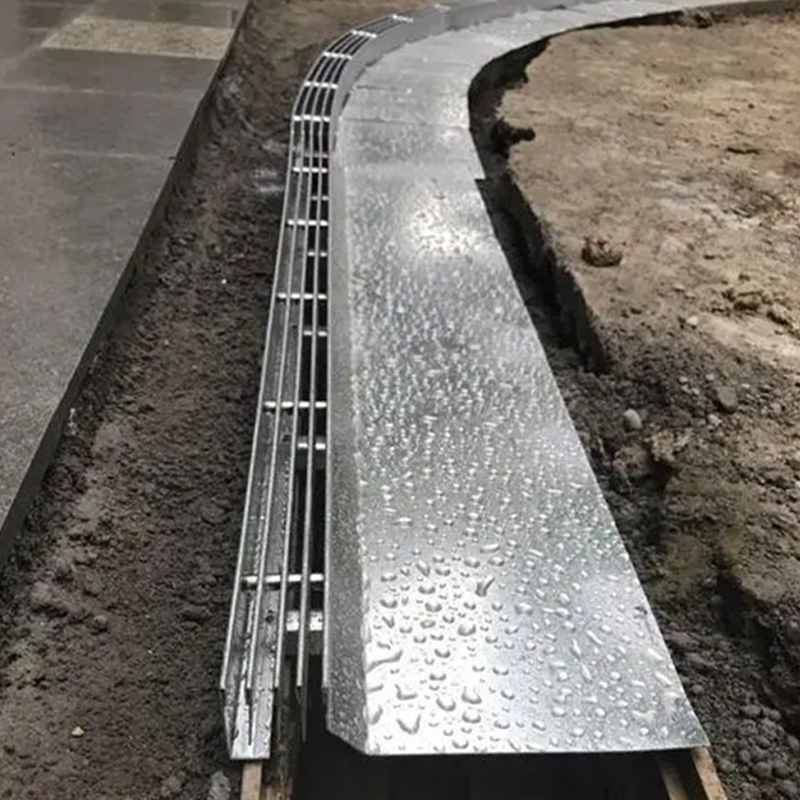 Wholesale High load-bearing capacity linear drainage channel Suppliers, Factory Jiangsu Yameng Traffic Road Facilities Co., Ltd is China wholesale High load-bearing capacity linear drainage channel Suppliers and Facto...View Product →
Precast concrete is the most familiar material for this application. It is durable, easy to bed in mortar, and relatively inexpensive. Polymer concrete, also called resin concrete, adds a synthetic binder to the aggregate mix. The result is denser, less porous, and lighter than ordinary concrete while still behaving like a concrete-based drainage channel.
For shallow sections, resin concrete has a clear advantage in tolerances. The low water absorption reduces frost damage, and the smooth walls keep debris moving. In areas where de-icing salt is present, resin concrete does not spall as easily as ordinary concrete.
For shallow channels exposed to mild chemicals or frequent wetting, a high-pressure-resistant resin drainage channel keeps the walls dense and simplifies maintenance over the life of the installation.
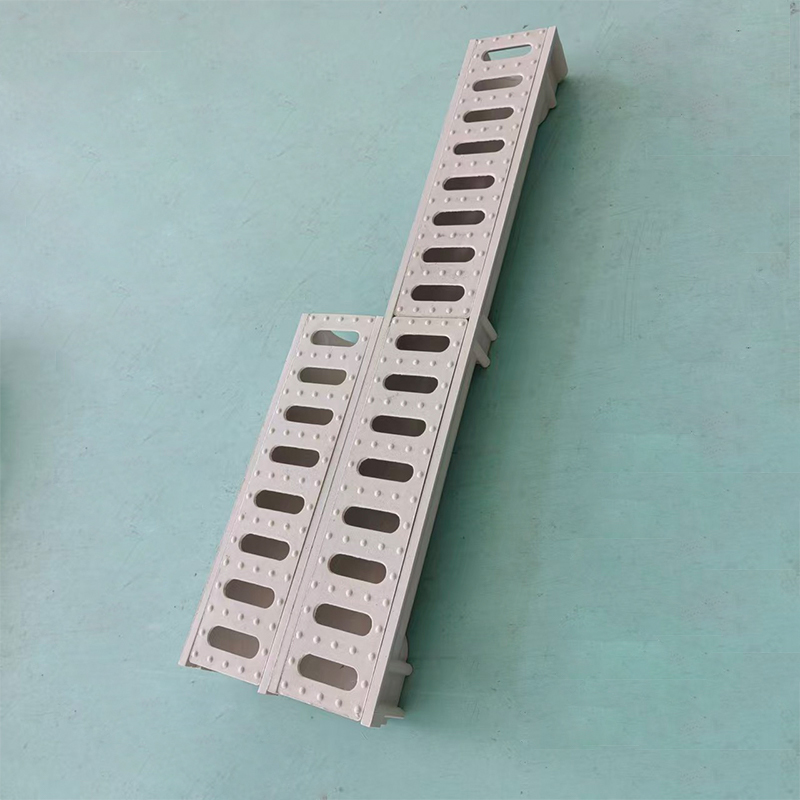 Wholesale High-pressure resistant resin drainage channel Suppliers, Factory - JiJiangsu Yameng Traffic Road Facilities Co., Ltd is China wholesale High-pressure resistant resin drainage channel Suppliers and Factory K...View Product →
Use a shallow concrete drainage channel where the available excavation depth is 120 mm or less and the catchment area is relatively small. Typical jobs include:
The key is the ratio between the catchment area and the channel width. A 100 mm wide shallow channel can handle a typical residential patio if the fall is correct and the outlet is not restricted. Larger areas demand either wider channels or deeper bodies.
When the schedule is tight, a fast-drainage precast drainage channel uses a smooth internal profile and matched components so stormwater leaves the slab quickly once the trench is compacted.
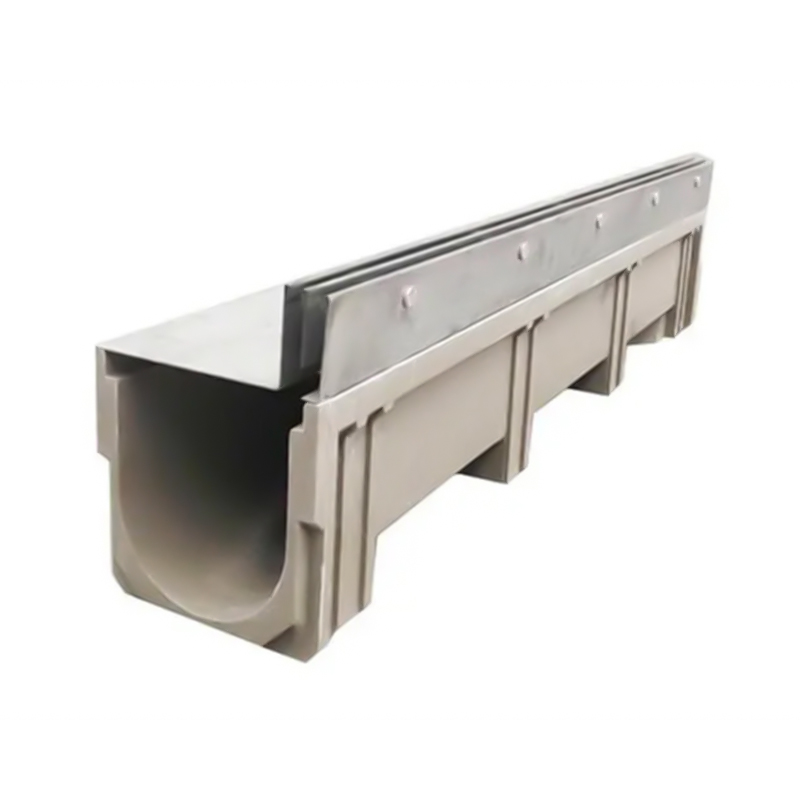 Wholesale Fast drainage speed Precast Drainage Channel Suppliers, Factory - JianJiangsu Yameng Traffic Road Facilities Co., Ltd is China wholesale Fast drainage speed Precast Drainage Channel Suppliers and Factory Pro...View Product →
A shallow channel is only as good as its installation. The strongest product will fail if the gradient is wrong or the base moves.
Give the channel a continuous fall toward the outlet. For clean rainwater, 1:100 is usually the minimum; if the water carries sand or leaves, use 1:50. Keep the outlet pipe diameter equal to the outlet spigot of the channel. A reduced pipe size creates a bottleneck that quickly strangles a shallow drain.
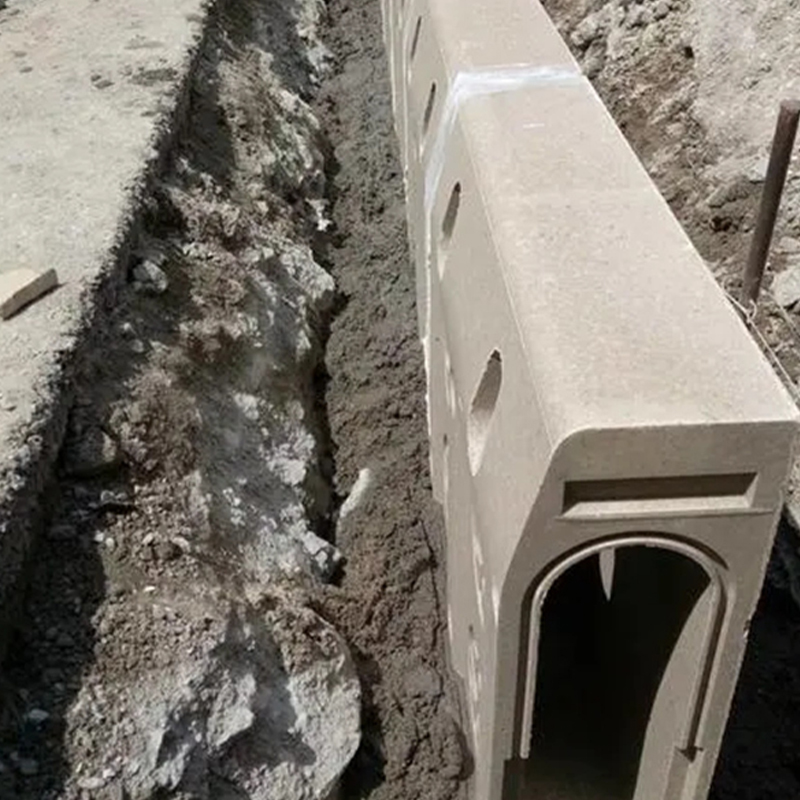
Excavate at least 100 mm below the channel base and compact the subgrade. Place a lean concrete or compacted granular bedding layer to create an even support. Backfill in layers and compact each layer, especially beside the channel wall. Where vehicles will park, surround the channel with a concrete haunch to prevent lateral movement.
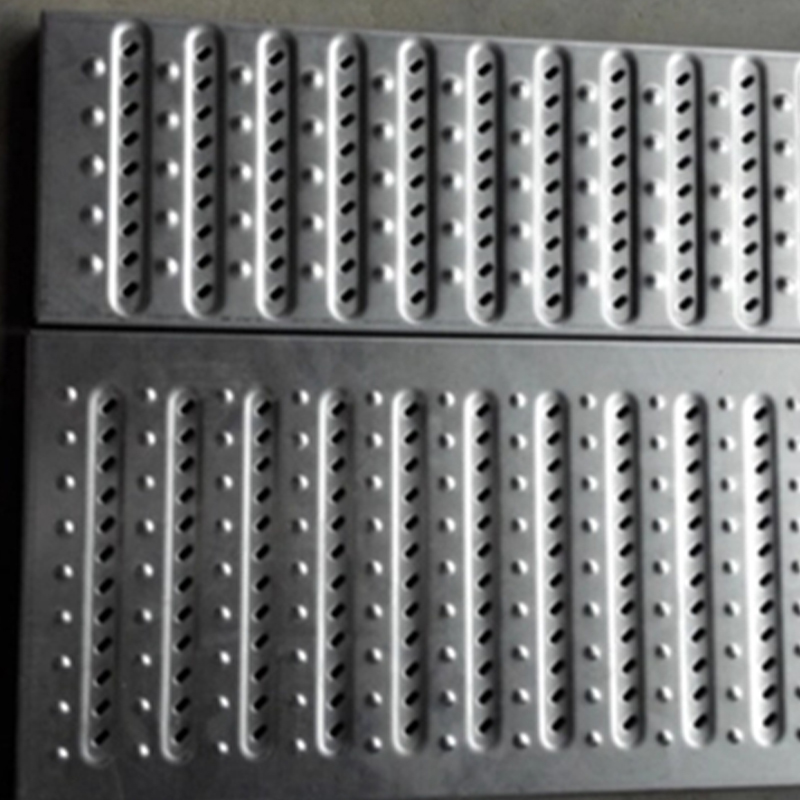
Clean and seal the joints between sections before pulling the sections together. A shallow channel moves easily if the bedding is not stable, so check the alignment after every two or three lengths. Install lockable or screw-down grates in public areas, and choose a slip-resistant surface for pedestrian zones.
For a more detailed sequence, see this step-by-step channel drainage installation guide.
Most failures in shallow concrete drainage channels come from a small set of repeated errors:
Choose a shallow concrete drainage channel in the same way you choose any drain: define the water load first, then the load class, and then the available depth.
Measure the catchment area and estimate the design rainfall intensity for your region. This gives a flow rate that must pass through the channel. Select a channel width, usually 100 mm, 150 mm, or 200 mm, and check the manufacturer's flow capacity chart. If the depth limit is below the minimum required for the selected width, go wider rather than thinner.
After that, check the load class and material. For most residential projects, a resin or precast shallow channel in B125 or C250 will be sufficient. To compare options side by side, browse the manufacturer's drainage channel series before finalizing the order.
Use a shallow concrete drainage channel only where site depth is the controlling factor. It solves patio, walkway, and light vehicle drainage problems without the excavation cost of a deep trench drain, but it does not replace a deep system for heavy runoff. Maintain the fall, verify the load class, and choose a tested product from a supplier who can document the actual flow capacity.
Related Products
Our Modular GRC System merges installation speed with long-term durability, providing a high-perform...
READ MOREOur Modular GRC System merges installation speed with long-term durability, providing a high-perform...
READ MOREOur Modular GRC System merges installation speed with long-term durability, providing a high-perform...
READ MOREOur Modular GRC System merges installation speed with long-term durability, providing a high-perform...
READ MOREOur Modular GRC System merges installation speed with long-term durability, providing a high-perform...
READ MOREOur Modular GRC System merges installation speed with long-term durability, providing a high-perform...
READ MORE
Contact us
Factory Address
Group 12, Quanxin Village, Donghai Town, Qidong City, Nantong City, Jiangsu Province, China
phone
+86-13914963840
+86-13451754670
products
QR CODE
 Wholesale Drainage Ditch Manufacturers